
Improving website conversion rates means turning more visitors into customers or leads. It involves optimizing your website’s design, content, and user experience to encourage specific actions such as purchases, sign-ups, or inquiries. By focusing on key areas like page speed, call-to-action clarity, and trust signals, businesses can see measurable results in their online performance.
Key Takeaways
- Conversion rate optimization improves the percentage of visitors completing desired actions on your site.
- Effective strategies include enhancing website usability, clear calls-to-action, and mobile responsiveness.
- Testing and analytics are essential to identify what works best for your audience.
- Trust elements like testimonials and security badges build credibility and increase conversions.
- Professional web design and SEO services can significantly accelerate conversion improvements.
Understanding Website Conversion Rates
The conversion rate is the ratio of visitors who complete a desired action compared to total visitors. This could be making a purchase, filling out a form, subscribing to a newsletter, or downloading a resource. Improving this rate means getting more value from existing traffic, which often costs much less than driving new visitors.
Key Factors Affecting Conversion Rates
Website Design and Usability
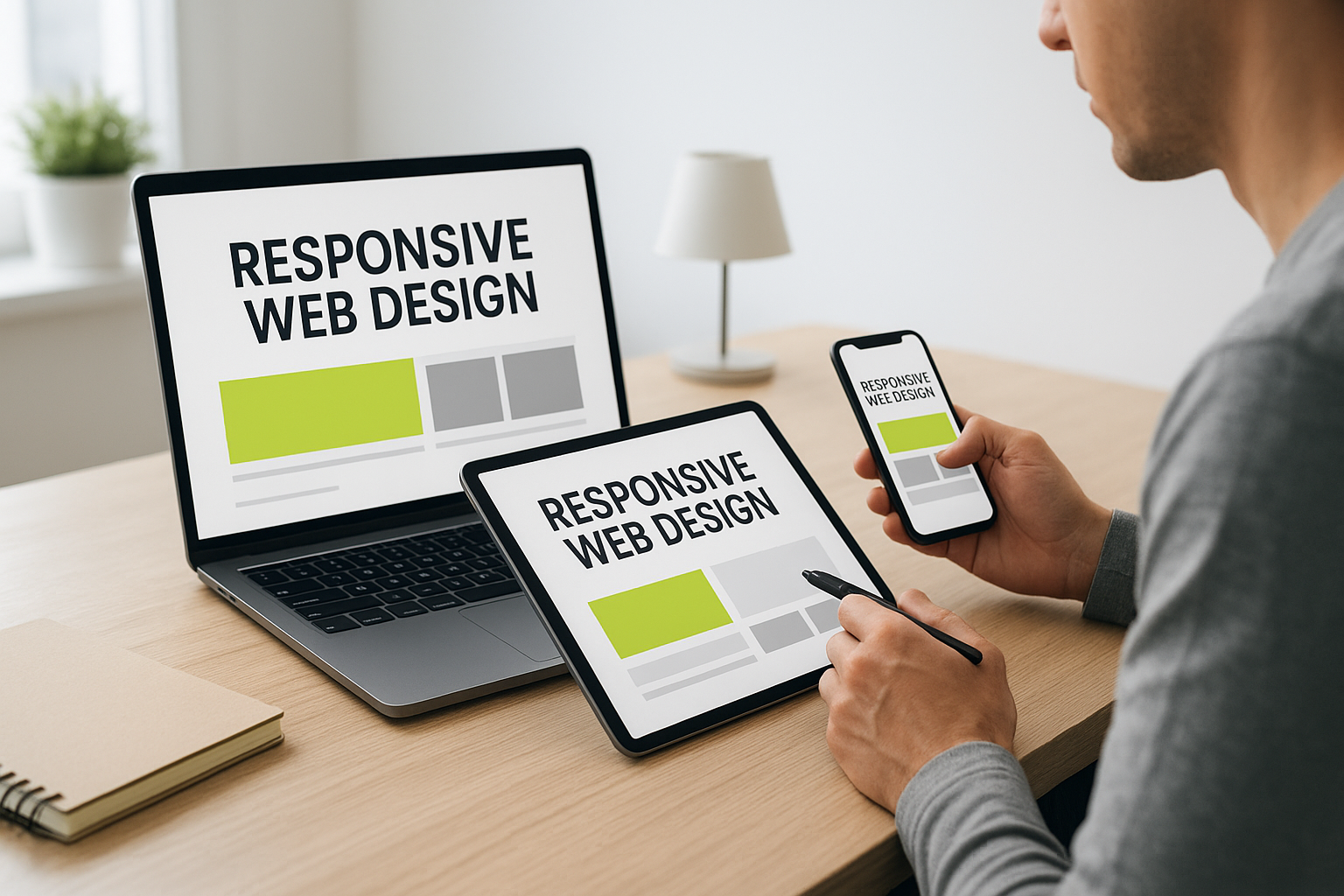
A clean, intuitive design helps users navigate easily. Key elements include fast loading times, simple navigation menus, and a clear information hierarchy. Responsive design ensures functionality across devices, crucial since mobile users often exceed desktop visitors.
Clear Calls-to-Action (CTAs)
CTAs must be prominent, compelling, and relevant. Use action-oriented language and place buttons or links strategically on pages where decisions happen. Contrasting colors and whitespace help CTAs stand out without overwhelming users.
Trust and Credibility
Trust indicators like customer testimonials, case studies, security badges, and privacy policies reassure visitors. Transparency about your products or services and contact information also supports confidence.
Practical Strategies to Improve Conversion Rates
- Optimize Page Speed: Slow sites cause visitors to leave. Compress images, leverage browser caching, and use reliable hosting.
- Simplify Forms: Minimize the information requested. The shorter and clearer the form, the higher the completion rate.
- Leverage A/B Testing: Compare different versions of pages or elements to find what resonates best with your audience.
- Use High-Quality Content: Informative and persuasive content tailored to your users’ needs builds interest and helps decision-making.
- Ensure Mobile Optimization: Mobile-friendly sites improve usability and search rankings, attracting more ready-to-convert visitors.
Measuring and Analyzing Conversion Performance
Use analytics tools like Google Analytics to track conversions and identify bottlenecks. Pay attention to metrics such as bounce rate, time on site, and user flow. Heatmaps and session recordings offer additional insights into user behavior.
Common Conversion Rate Optimization Mistakes
- Ignoring mobile experience leads to lost conversions from a growing user segment.
- Overloading pages with too many CTAs or information can confuse visitors.
- Neglecting to test leads to assumptions rather than data-driven improvements.
- Not building trust or providing social proof reduces credibility and user confidence.
Enhancing website conversion rates requires a balanced approach between design, content, usability, and ongoing analysis. Businesses that invest in professional web design services often see faster, more sustained improvements.
Working with experts can help tailor your site’s conversion strategy to your industry and audience. Habizen Tech Limited offers professional web design solutions that focus on user experience and performance, driving higher conversions and ROI.
Explore more about how
professional web design services can transform your site’s effectiveness.
Frequently Asked Questions
What is a good website conversion rate?
Conversion rates vary widely by industry, but generally, a rate between 2-5% is considered average. Higher rates indicate effective optimization efforts.
How long does it take to improve conversion rates?
Results can be seen within weeks after implementing changes, but continuous testing and optimization over months yield the best outcomes.
Does website speed really affect conversion rates?
Yes, slow load times frustrate users and increase bounce rates, directly lowering conversions. Optimizing speed improves user satisfaction and engagement.
Can A/B testing increase conversion rates?
Absolutely. A/B testing helps identify which elements perform better, allowing data-driven decisions that enhance conversions.
Why is mobile optimization essential for conversions?
More users browse and shop on mobile devices. A mobile-optimized site offers a seamless experience that supports higher conversions.
Should I hire a professional to improve my website conversion?
Professional expertise can accelerate improvements by applying proven strategies, optimizing design, and ensuring technical best practices.
Partnering with Habizen’s web design specialists can provide tailored solutions for your business challenges.
Get started on enhancing your website’s performance and conversion with professional guidance.