
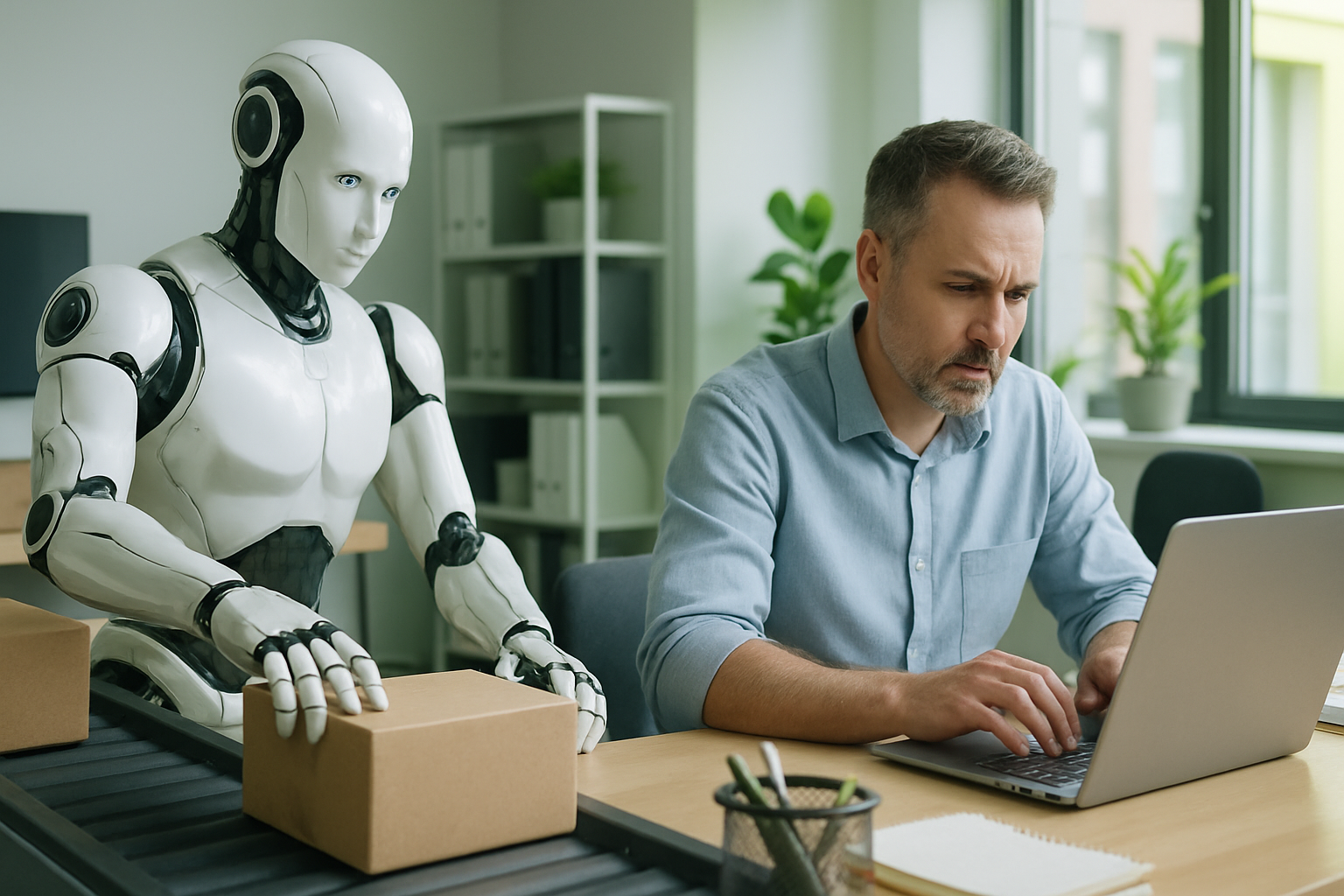
AI Technology Moves Faster Than Manual Work
Artificial Intelligence (AI) technology has transformed the landscape of various industries, offering rapid solutions that far outpace traditional manual work. This article explores how AI enhances productivity, the benefits of automation, and the implications for the future of employment.
The Rise of AI Technology
AI technology has come a long way since its nascent days, evolving into sophisticated systems capable of performing complex tasks. Industries ranging from healthcare to manufacturing have seen unprecedented advancements due to AI. For example, machine learning algorithms can analyze vast datasets in seconds, making decisions that would take humans much longer. As businesses adopt AI, they quickly recognize its potential to outperform manual processes in terms of speed and accuracy.
Understanding Automation: Benefits and Challenges
Automation refers to the use of technology to execute tasks without human intervention. The benefits are significant:
- Increased Efficiency: Tasks that typically take hours can be completed in minutes.
- Cost Reduction: Automating processes can drastically lower labor costs over time.
- Enhanced Accuracy: AI systems reduce human error, ensuring higher quality outcomes.
However, challenges exist. There’s a growing concern about job displacement, requiring a focus on retraining the workforce. As you can see, the landscape of work is changing, and so must the skill sets of those in the job market.
How AI Technology Outpaces Manual Work
When it comes to performance metrics, AI technology shines brightly. In specific studies highlighted by McKinsey, companies that adopted AI saw productivity improvements of about 20-30% in various sectors. For instance, customer service departments using AI chatbots for initial inquiries experienced faster response times, significantly improving customer satisfaction. By contrast, traditional methods fell short, often leaving customers waiting for long replies.
What Can AI Automate?
AI can automate numerous tasks across industries, such as:
- Data Entry: Automating data collection and entry saves time and reduces errors.
- Customer Support: AI chatbots can handle multiple queries simultaneously outside business hours.
- Manufacturing: Robots can perform specific assembly line tasks faster than humans.
Can AI Replace Manual Labor?
The short answer is yes, but with caveats. AI systems can perform tasks traditionally done by humans, leading to fears of widespread job loss. According to a report by the World Economic Forum, about 85 million jobs may be displaced by AI by 2025, but this also presents an opportunity for 97 million new roles that require different skill sets. The real challenge is ensuring that the workforce is equipped for this transition.
Case Studies: AI Success in Various Industries
Healthcare
In healthcare, AI technologies like IBM’s Watson have improved diagnostics by analyzing vast medical datasets. For example, Watson can review clinical notes and medical histories faster than human doctors, enabling quicker treatment decisions.
Retail
Retail giants like Amazon employ AI for inventory management, using algorithms to predict product demand, optimizing stock levels, and significantly reducing waste and overstock issues.
Transportation
Companies like Tesla are at the forefront of robotic process automation, developing self-driving technologies that promise safer and faster travel compared to standard driving methods.
The Future of Employment with AI
The future workforce will undoubtedly include AI technologies, but this doesn’t mean the end for human jobs. Instead, it’s a matter of adapting to new roles where creativity, emotional intelligence, and complex reasoning are crucial. As jobs evolve, educational institutions must innovate curriculums to prepare students for future job requirements, emphasizing STEM and soft skills.
Skills Needed in an AI-Driven Economy
To thrive in an AI-dominated economy, workers need to cultivate several key skills:
- Data Literacy: Understanding data and analytics will become essential.
- Technical Skills: Familiarity with programming and AI tools is beneficial.
- Soft Skills: Creativity, teamwork, and emotional intelligence remain irreplaceable by machines.
Ethical Implications of AI in the Workplace
As companies increasingly adopt AI technology, ethical considerations arise. Questions about privacy, decision-making transparency, and potential biases in AI algorithms require careful thought. Companies must navigate these challenges responsibly by developing policies that ensure ethical AI practices in the workplace.
Conclusion
AI technology is reshaping industries, enhancing speed and efficiency like never before. Acknowledging both its benefits and associated challenges is crucial for employees and businesses alike as we transition into an era dominated by intelligent systems. Companies must focus on reskilling their workforce while ethical considerations guide the adoption of AI tools.
Frequently Asked Questions
How does AI improve productivity?
AI enhances productivity by automating repetitive tasks, reducing human error, and providing actionable insights through data analysis.
What are the benefits of automation?
Benefits of automation include increased efficiency, cost savings, and improved quality of work due to the reduction of human errors.
How is AI changing the job market?
AI is creating new job opportunities while displacing some traditional roles, necessitating a shift in the skills required for future employment.
What skills does the workforce need in an AI-driven economy?
Workers will need data literacy, technical skills related to AI, and strong soft skills like creativity and emotional intelligence.
How can businesses benefit from automation?
Automation allows businesses to streamline operations, reduce operational costs, and stay competitive in their respective markets.
