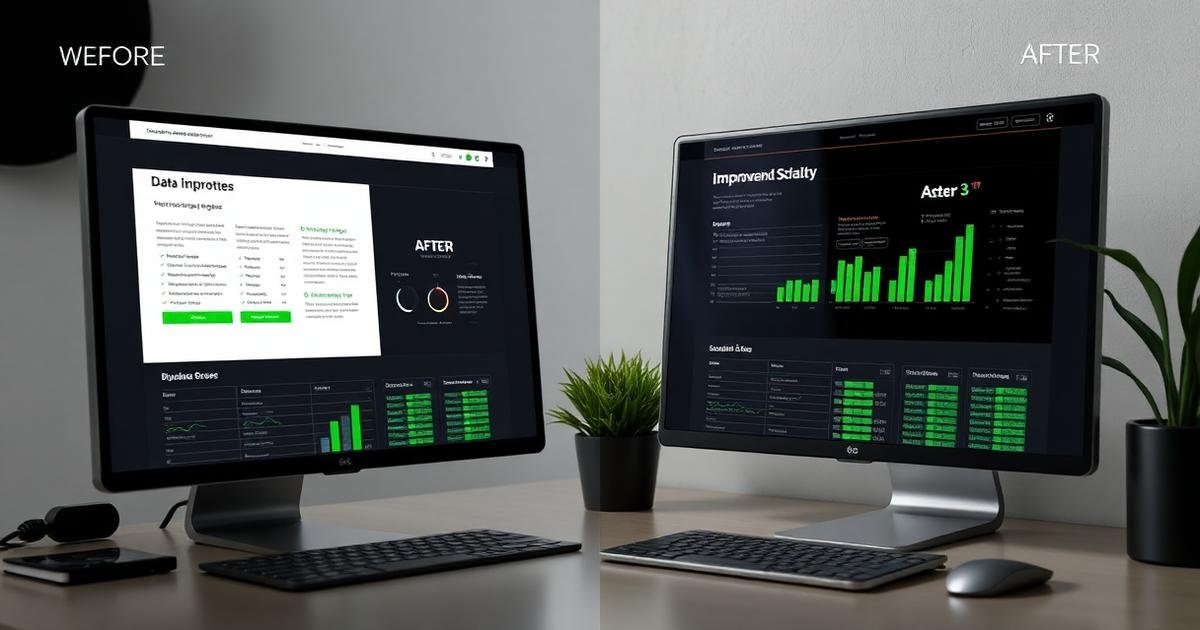

Web design is the process of planning, creating, and maintaining the visual and functional elements of a website. It encompasses layout, colour, typography, imagery, user experience, and technical performance. For small businesses in 2025, professional web design is not a luxury — it is the foundation of every digital marketing effort and often the first impression customers have of your brand.
- Web design covers visual design, UX, and technical performance — not just how a site looks
- 75% of consumers judge a business’s credibility based on its website design alone
- A professionally designed website can increase conversion rates by up to 400%
- Mobile-first design is essential — over 60% of web traffic comes from mobile devices
- Small businesses in New York, London, Toronto, and Sydney that invest in quality web design consistently outperform competitors
- Habizen Tech Limited provides end-to-end web design and development for businesses of all sizes
- What Is Web Design? A Clear Definition
- Why Web Design Matters for Small Businesses in 2025
- Key Statistics Every Business Owner Should Know
- Core Elements of Professional Web Design
- Types of Web Design: Which Does Your Business Need?
- The Web Design Process: Step by Step
- Best Practices for Small Business Websites in 2025
- Common Web Design Mistakes That Cost Businesses Money
- Web Design for Local Businesses: New York, London, Toronto & Beyond
- DIY Website Builders vs Professional Web Design Agency
- Real-World Case Study
- Frequently Asked Questions
- Conclusion and Next Steps
Your website is open 24 hours a day, 7 days a week. It works while you sleep, speaks to customers across time zones, and forms the first impression millions of potential clients will have of your business. In 2025, a poorly designed website does not just look bad — it actively costs you customers, rankings, and revenue.
This comprehensive guide explains exactly what web design is, why it matters more than ever, and what small businesses in competitive markets like New York, London, Toronto, and Sydney need to do to build a website that genuinely works for their business.
What Is Web Design? A Clear Definition
Web design is the discipline of planning, conceptualising, and building the visual appearance, layout, and user experience of a website. It is a multidisciplinary field that combines graphic design, user interface design, user experience design, and front-end development to create digital environments that are both attractive and functional.
Contrary to popular belief, web design is far more than choosing colours and fonts. At its core, it answers a fundamental business question: how do we create a digital experience that turns visitors into customers?
Web Design vs Web Development: What’s the Difference?
- Web Design focuses on the visual and experiential aspects — how the site looks, feels, and guides users toward a goal.
- Web Development focuses on the technical implementation — writing the code that makes the design functional in a browser.
- Full-Service Agencies like Habizen Tech Limited handle both, ensuring design and development are fully aligned from the start.
Why Web Design Matters for Small Businesses in 2025
The stakes of web design have never been higher. Consumers today are more discerning, more impatient, and have more choices than at any point in history. A website that loads slowly, looks outdated, or is difficult to navigate on a phone does not just create friction — it sends customers directly to your competitors.
For small businesses in cities like London, Los Angeles, Vancouver, and Melbourne, where competition is intense and customers are sophisticated, professional web design is a genuine competitive advantage — not an optional extra.
First Impressions Happen in 0.05 Seconds
Research from Google shows that users form a visual opinion of a website within 50 milliseconds of landing on it. In that fraction of a second, your design is either building trust or destroying it. There is no neutral ground. A professional, clean, fast-loading design signals credibility and expertise. A cluttered, slow, or outdated design signals the opposite — and 38% of users will simply leave and never return.
Your Website Is Your Top Salesperson
A well-designed website works as the most cost-effective sales tool in your arsenal. Unlike a human salesperson, it never takes a day off, never has a bad day, and can engage thousands of visitors simultaneously. Businesses in Toronto and New York that invest in conversion-focused web design consistently report it as their highest-ROI marketing investment.
Key Statistics Every Business Owner Should Know
“Design is not just what it looks like and feels like. Design is how it works.” — Steve Jobs
These numbers translate directly into business outcomes. A local service business in Sydney or Manchester that upgrades from a basic DIY website to a professionally designed site typically sees a measurable increase in enquiry rates within the first 60–90 days.
Core Elements of Professional Web Design
1. Visual Hierarchy and Layout
Every element on your page competes for your visitor’s attention. Professional web design uses visual hierarchy — size, contrast, colour, and spacing — to guide the eye naturally toward the most important information and calls to action.
2. Typography
Font choice communicates personality. A law firm in London should use different typography than a creative agency in Los Angeles. Professional web designers select typefaces that are not only beautiful but also highly readable across all screen sizes and devices.
3. Colour Psychology
Colour is not a cosmetic decision — it is a psychological one. Colours trigger emotional responses and associations that directly influence purchasing decisions. Your brand’s colour palette should be applied consistently across your entire website to reinforce identity and build recognition.
4. Mobile Responsiveness
More than 60% of web traffic now comes from mobile devices. In cities like New York and Toronto, that figure can be even higher. A responsive website automatically adapts its layout and functionality to any screen size. Google’s algorithm also penalises non-mobile-friendly websites in search rankings.
5. Page Speed and Performance
Design and performance are inseparable. A beautifully designed page that takes 5 seconds to load will lose 90% of its visitors before they ever see the design. Professional web design in 2025 must account for Core Web Vitals — Google’s performance metrics that directly influence both user experience and search rankings.
6. User Experience (UX)
UX design is the science of making websites intuitive. It encompasses navigation structure, information architecture, button placement, form design, and every micro-interaction a user has with your site. Exceptional UX removes friction from the conversion journey.
7. Calls to Action (CTAs)
Every page on your website should have a clear, compelling call to action. Whether that is “Get a Free Quote,” “Book a Consultation,” or “Shop Now,” your CTAs guide visitors through the conversion funnel.
Types of Web Design: Which Does Your Business Need?
| Type | Best For | Key Characteristics |
|---|---|---|
| Business / Brochure Website | Service businesses, consultants, local businesses | 5–15 pages, service showcase, contact forms, local SEO optimised |
| eCommerce Website | Online retailers, product businesses | Product pages, checkout, payment integration, inventory management |
| Landing Page | Campaign-specific conversion, lead generation | Single purpose, high conversion focus, A/B tested |
| WordPress Website | Content-heavy businesses, blogs, flexible sites | Easy content management, plugin ecosystem, scalable |
| Shopify Store | eCommerce businesses wanting a managed platform | Hosted, secure, built-in payment processing, scalable |
| Custom Web Application | SaaS businesses, platforms, complex requirements | Fully bespoke, database-driven, unique functionality |
The Web Design Process: Step by Step
- Discovery and Strategy: We begin with a deep dive into your business — your goals, target audience, competitors, and unique value proposition. This phase determines the strategic foundation of every design decision that follows.
- Sitemap and Information Architecture: Before any visual design begins, we map out your website’s structure — how many pages, how they connect, and what content belongs where.
- Wireframing: Wireframes are structural blueprints of each page, showing layout and content placement without visual design. This is where UX decisions are made and tested.
- Visual Design: Your brand identity is applied to the wireframes to create fully designed page mockups. We refine typography, colour, imagery, and interactive elements.
- Development: The approved designs are built into a live website using clean, semantic code. We focus on performance, accessibility, and SEO best practices throughout.
- Content Integration: Your copy, images, videos, and other content are integrated into the design.
- Quality Assurance: Every page is tested across multiple browsers and devices before launch.
- Launch and Handover: We launch your site and provide full training so your team can manage content confidently.
Best Practices for Small Business Websites in 2025
Design for Speed First
Google’s Core Web Vitals now directly influence search rankings. Your website should load its main content in under 2.5 seconds, respond to user interaction in under 100 milliseconds, and maintain visual stability during loading. These are not aspirational targets — they are the minimum standard for competitive websites in 2025.
Make Your Value Proposition Immediately Clear
A visitor to your website in Vancouver or Birmingham should know exactly what you do, who you serve, and why they should choose you within 5 seconds of landing on your homepage.
Optimise Every Image
Unoptimised images are the single most common cause of slow-loading websites. Every image should be compressed, correctly sized, converted to modern formats like WebP, and include descriptive alt text for both accessibility and SEO.
Build Trust Signals Throughout
Testimonials, reviews, case studies, certifications, security badges, and client logos should appear throughout your website, not just on a dedicated testimonials page. Strategic placement of social proof at key decision points significantly increases conversion rates.
Common Web Design Mistakes That Cost Businesses Money
- No clear call to action: Visitors who do not know what to do next will simply leave.
- Slow page load times: Every additional second of load time reduces conversions by approximately 7%.
- Not mobile-optimised: A site that looks broken on mobile is losing the majority of your potential traffic.
- Cluttered navigation: Too many menu options create decision paralysis. Simplify.
- Generic stock photos: Real photos of your team and work build trust. Generic stock images erode it.
- No SSL certificate: Browsers actively warn users when a site is not secure. This is non-negotiable.
- Ignoring accessibility: An inaccessible website excludes users with disabilities and creates legal risk in the US, UK, Canada, and Australia.
- Skipping the SEO foundation: A beautiful website that nobody can find through search delivers zero value.
Web Design for Local Businesses: New York, London, Toronto & Beyond
Local businesses have unique web design requirements that go beyond what generic templates provide. Whether you run a dental practice in Chicago, a law firm in Manchester, a real estate agency in Sydney, or a home services company in Calgary, your website needs to speak directly to the local community you serve.
Local SEO Integration
Your web design should be built with local SEO in mind from day one. This includes location-specific landing pages, structured data markup (Schema.org) for local businesses, Google Maps integration, and consistent NAP (Name, Address, Phone) information across every page.
Location-Specific Landing Pages
If you serve multiple areas — say, both Los Angeles and San Francisco, or both London and Manchester — dedicated landing pages for each location dramatically improve local search visibility.
DIY Website Builders vs Professional Web Design Agency
| Factor | DIY (Wix, Squarespace etc.) | Professional Agency (Habizen Tech) |
|---|---|---|
| Design Quality | Template-based, generic | Bespoke, brand-aligned, unique |
| Performance | Often slow, limited optimisation | Optimised for Core Web Vitals |
| SEO Capability | Basic, significant limitations | Full technical SEO foundation built in |
| Scalability | Limited — hits walls as business grows | Built to scale with your business |
| Time Investment | Significant ongoing time from your team | Fully managed — your focus stays on business |
| Long-Term Cost | Monthly fees + your time = often higher | Better ROI over 2–3+ years |
| Conversion Rate | Typically lower — generic UX | Optimised for your specific audience |
Real-World Case Study
How a Home Services Company in New York Tripled Its Online Enquiries
A plumbing and HVAC company based in New York City had been running a basic DIY website for three years. Despite excellent reviews and a strong local reputation, their website generated fewer than 10 enquiries per month from organic traffic.
They engaged Habizen Tech Limited for a full website redesign. Here is what we did:
- Redesigned the website from scratch with a mobile-first, conversion-focused approach
- Created dedicated service pages for each of their 8 core services
- Built location-specific landing pages for the 6 NYC boroughs and surrounding areas
- Optimised page speed — reducing load time from 6.2 seconds to 1.4 seconds
- Implemented comprehensive Schema markup for local business, services, and FAQs
- Integrated a prominent click-to-call button on every mobile page
- Added a Google Reviews widget displaying their 4.8-star rating prominently
Results after 6 months:
- 312% increase in organic website enquiries
- Page 1 Google rankings for 23 target local keywords
- Bounce rate reduced from 74% to 41%
- Mobile conversion rate increased by 280%
- Paid advertising spend reduced by 45% while maintaining the same lead volume
Frequently Asked Questions
Ready to Build a Website That Actually Grows Your Business?
Get a free consultation with Habizen Tech Limited’s web design team. We serve small businesses across New York, London, Toronto, Sydney, and beyond.
Get Your Free Quote →Conclusion
Web design in 2025 is about far more than aesthetics. It is the strategic foundation of your entire digital presence — the place where brand credibility, user experience, search engine visibility, and conversion performance all converge. For small businesses in competitive markets like New York, London, Toronto, and Sydney, investing in professional web design is one of the highest-leverage decisions you can make.
A great website works for your business around the clock, communicates your value to thousands of potential customers simultaneously, and builds the trust necessary to convert visitors into paying clients. A poor website does the opposite — and the cost compounds over time.
The question is not whether you can afford professional web design. It is whether you can afford not to have it.
Habizen Tech Limited has helped hundreds of businesses transform their online presence with professional web design, development, and digital marketing. If you are ready to build a website that truly works for your business, contact us today for a free, no-obligation consultation.